
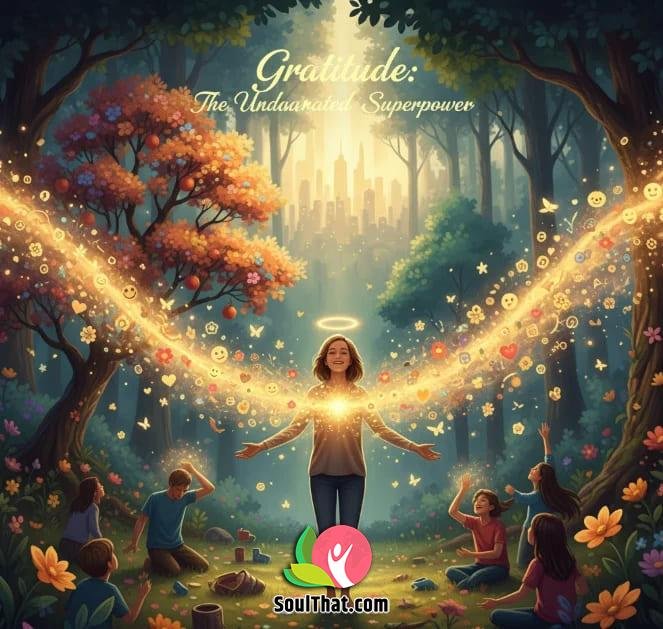
Imagine a power so simple that anyone can access it, yet so transformative that it can change your entire life. A power that doesn’t cost money, doesn’t require training, and doesn’t depend on external circumstances. That power is gratitude. Despite its simplicity, gratitude is often overlooked in a world obsessed with achievement, material wealth, and instant gratification. But those who harness it consistently experience mental clarity, emotional balance, and even physical health improvements. In this article, we will dive deep into why gratitude is the most underrated superpower and how to wield it effectively in daily life.
The Hidden Strength of Gratitude
Gratitude is more than saying “thank you” or acknowledging a kind gesture. At its core, gratitude is a conscious choice—a way of seeing life that emphasizes what is present rather than what is missing. It shifts your focus from scarcity to abundance and turns ordinary moments into sources of joy.
How Gratitude Transforms Your Mind
-
Boosts Positive Emotions
-
Gratitude increases feelings of happiness and contentment.
-
Regularly recognizing the good in life reduces stress, anxiety, and depression.
-
-
Improves Relationships
-
Expressing appreciation strengthens bonds with friends, family, and colleagues.
-
People who feel valued tend to reciprocate kindness, creating a positive cycle.
-
-
Enhances Mental Resilience
-
Gratitude helps you cope with challenges by fostering optimism and hope.
-
It trains your brain to focus on solutions instead of problems.
-
-
Increases Self-Worth
-
Acknowledging your own strengths and achievements reduces self-doubt.
-
Gratitude helps you appreciate your unique contributions and progress.
-
Science Confirms Gratitude’s Power
Gratitude is not just a feel-good concept; it is supported by scientific research. Studies have shown that gratitude rewires the brain to notice positivity, leading to long-term psychological and physiological benefits.
| Benefit | Scientific Insight | Practical Result |
|---|---|---|
| Better Sleep | Journaling about gratitude before bed improves sleep quality by 25% | Wake up refreshed and energized |
| Stress Reduction | Gratitude reduces cortisol, the stress hormone | Lower anxiety levels and improved focus |
| Heart Health | Grateful individuals have healthier blood pressure and heart rate | Lower risk of cardiovascular issues |
| Happiness Boost | Gratitude activates the brain’s reward center | Increased daily life satisfaction |
Graph Idea: A simple line graph showing “Frequency of Gratitude Practice” on the X-axis vs “Happiness Level” on the Y-axis, showing a positive upward trend.
The Ripple Effect: Gratitude in Action
Gratitude doesn’t only improve your personal life; it has a ripple effect that touches everyone around you.
-
At Work: Employees who feel appreciated are more productive and cooperative.
-
In Families: Expressing gratitude reduces conflicts and strengthens emotional bonds.
-
In Communities: Gratitude-driven actions inspire kindness, volunteering, and social support.
Infographic Idea: A central circle labeled “You” with arrows radiating outward to “Family,” “Friends,” “Work,” and “Community,” illustrating how gratitude spreads.
Daily Habits That Supercharge Gratitude
Gratitude, like any superpower, becomes stronger with practice. Here are practical ways to make it a daily habit:
-
Gratitude Journaling
-
Write 3–5 things you’re thankful for every morning or night.
-
Include small victories and simple pleasures, like a warm cup of coffee or a sunny day.
-
-
Mindful Moments
-
Pause for 2–5 minutes each day to notice and appreciate your surroundings.
-
Focus on sensory experiences: the feel of water, the sound of birds, or the warmth of sunlight.
-
-
Express Appreciation to Others
-
Send a quick text, note, or verbal acknowledgment to someone who made your day better.
-
Be specific about what you appreciate—it creates a deeper emotional connection.
-
-
Reframe Challenges
-
Look for lessons or hidden opportunities in difficulties.
-
Example: Losing a job might be a chance to explore a new career path.
-
-
Gratitude Rituals
-
Incorporate gratitude into daily routines: mealtime, bedtime, or morning reflection.
-
Use visual reminders, like sticky notes or a gratitude jar.
-
Bullet List Insight: These habits not only build gratitude but also train the brain to seek positivity automatically.
How Gratitude Enhances Physical Health
The mind-body connection means gratitude isn’t only a mental tool—it has real, measurable effects on physical health.
-
Stronger Immunity: Grateful people tend to engage in healthier behaviors, sleep better, and recover faster.
-
Lower Blood Pressure: Gratitude lowers stress levels, reducing strain on the cardiovascular system.
-
Pain Management: Studies suggest that gratitude can reduce perception of pain and improve tolerance.
-
Longevity: People who regularly practice gratitude report higher life satisfaction and longer life expectancy.
Chart Idea: A bar chart comparing stress levels and blood pressure among “Grateful” vs “Non-Grateful” participants, showing significant differences.
Gratitude vs. Positivity: Why Gratitude Wins
Many people confuse gratitude with general positivity. Here’s why gratitude is more powerful:
| Aspect | Positivity | Gratitude |
|---|---|---|
| Focus | Avoiding negative thoughts | Appreciating what exists |
| Emotional Range | Often fleeting happiness | Sustained contentment |
| Dependency | External events can boost it | Internal, consistent practice |
| Relationship Impact | Limited to mood | Strengthens social bonds |
Gratitude doesn’t ignore life’s hardships—it embraces them while finding value and learning in every situation.
Real-Life Examples of Gratitude’s Impact
-
Historical Figures
-
Oprah Winfrey attributes her success to daily gratitude practices.
-
Abraham Lincoln kept a gratitude journal, which helped him navigate personal and national crises.
-
-
Everyday Heroes
-
Teachers who show appreciation for students notice increased engagement and performance.
-
Healthcare workers who practice gratitude report lower burnout and higher empathy.
-
-
Personal Stories
-
People recovering from trauma or illness often cite gratitude as a key factor in emotional recovery.
-
Athletes use gratitude to enhance focus, motivation, and resilience during setbacks.
-
Why Gratitude Is Often Overlooked
Even though gratitude is simple, many underestimate its power because:
-
Society prioritizes achievement over reflection.
-
People equate gratitude with weakness or passivity.
-
Immediate rewards overshadow long-term benefits.
-
Technology and social media distract from mindful awareness.
The irony is that while people chase external rewards, the internal superpower of gratitude can provide sustainable happiness and success.
Practical Tools to Cultivate Gratitude
-
Gratitude Apps
-
Examples: “Grateful,” “Reflectly,” and “Happier.”
-
These apps offer prompts, reminders, and tracking for daily gratitude practices.
-
-
Gratitude Jars
-
Write small notes of appreciation and place them in a jar.
-
Review them weekly to visualize the abundance in your life.
-
-
Affirmations and Mantras
-
Phrases like “I appreciate this moment” or “I am grateful for my journey” reinforce positive neural pathways.
-
-
Visual Reminders
-
Post sticky notes, vision boards, or digital screens with prompts to notice blessings daily.
-
Bullet Insight: Combining multiple tools increases the likelihood of gratitude becoming a natural habit.
How Gratitude Shapes Your Future
Gratitude doesn’t just make today better—it shapes tomorrow.
-
Decision-Making: Grateful individuals make calmer, more thoughtful choices.
-
Goal Achievement: Focusing on appreciation reduces comparison and envy, making personal goals clearer and more attainable.
-
Legacy Building: People remembered for gratitude leave stronger, more meaningful impacts on others.
Numbered List Example: Ways gratitude influences long-term success:
-
Encourages patience in goal pursuit.
-
Reduces impulsive behavior.
-
Strengthens social and professional networks.
-
Increases emotional intelligence.
-
Promotes sustainable happiness rather than temporary pleasures.
Conclusion: Unlocking Your Superpower
Gratitude is more than a polite gesture—it’s a life-altering superpower. It improves mental, emotional, and physical health, strengthens relationships, and sets the foundation for long-term fulfillment. While society chases material success and external validation, the quiet, consistent practice of gratitude offers a shortcut to true happiness and resilience.
Every day presents countless opportunities to activate this superpower. Whether through journaling, mindful observation, expressing appreciation, or reframing challenges, gratitude can transform ordinary experiences into sources of strength and joy.
Start today. Notice what you have, say thank you, and watch how your life unfolds. In a world where power is often measured by influence, wealth, or speed, gratitude quietly stands as the most underrated—and most effective—superpower of all.