
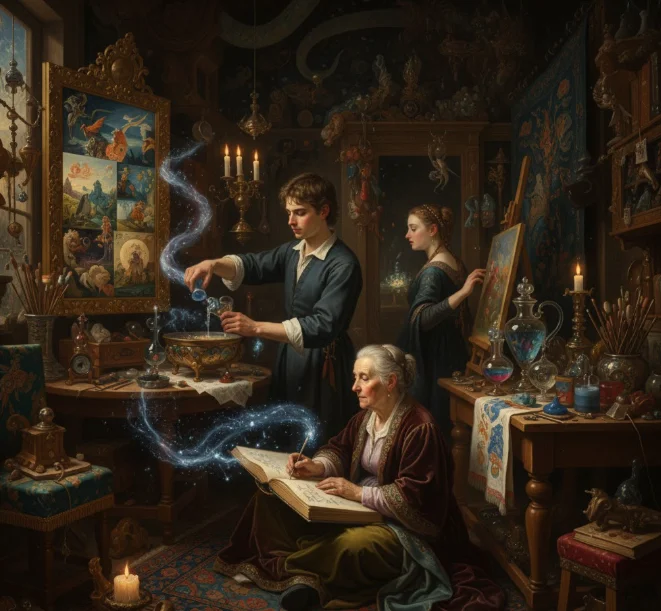
Introduction: The Mysterious Glow Behind Endless Creativity
Have you ever met someone who seems to create magic every single day—whether it’s painting, writing, composing music, or designing something extraordinary? These people seem unstoppable, as if their creative spark never fades. You might wonder, “How do they stay inspired all the time?”
The truth is, constant inspiration doesn’t come from luck. It’s built through quiet habits, sacred rituals, and a deep understanding of how to keep one’s creative flame alive. Behind every masterpiece lies a hidden rhythm—small daily actions that nourish the imagination, sharpen focus, and protect the joy of creation.
In this article, we’ll step inside the creative world of artists who never seem to run out of ideas. From morning rituals and creative environments to mental resets and spiritual practices—this guide uncovers the secret rituals that keep artists inspired for life.
Morning Magic — How Great Artists Begin Their Day
The First 60 Minutes Matter Most
Many lifelong creators say their mornings shape their entire day. Before checking their phones or facing the outside world, they begin with routines that awaken their senses and center their minds.
Here’s what some of the most consistently inspired artists do every morning:
-
Quiet reflection: Spending 10–15 minutes alone in silence or meditation.
-
Morning pages: Writing 2–3 pages of unfiltered thoughts to clear mental clutter.
-
Physical movement: Light stretching, yoga, or a quick walk to energize the body.
-
Intent setting: Choosing one word or intention for the day—like flow, peace, or focus.
These small acts act like opening a window in the mind. When the body is calm and the thoughts are untangled, creativity flows more freely.
“When you own your morning, you master your day—and your art.”
Creative Sanctuaries — Spaces That Feed the Soul
Every Artist Has a Sacred Space
Inspiration often hides in the atmosphere. Artists who stay inspired don’t just work anywhere—they build their creative environments like sanctuaries.
Common features of inspiring creative spaces:
| Element | Why It Matters | Example |
|---|---|---|
| Natural Light | Boosts mood and focus | Working near a sunny window |
| Personal Symbols | Connects emotion and memory | Hanging childhood photos or quotes |
| Order in Chaos | A system within mess | Organized desk clutter that sparks ideas |
| Nature’s Touch | Calms the nervous system | Plants, stones, or water bowls |
| Scent & Sound | Triggers creative flow | Incense, essential oils, or soft music |
An inspiring space doesn’t need to be fancy. It just needs to feel right. Many artists describe their studios, desks, or corners as “energy zones”—places where they can forget the world and dive into creation.
The Ritual of Movement — Keeping the Body in Rhythm
Why the Body Fuels the Mind
A mind stuck in routine often needs a moving body to unlock new ideas.
Artists who never lose inspiration treat movement as a daily ritual—not just exercise.
Here are their favorite ways to keep the creative energy alive:
-
Nature walks: Observing textures, sounds, and colors in real life refreshes artistic vision.
-
Stretch breaks: Every hour, standing up and stretching boosts blood flow to the brain.
-
Dance or flow movement: A few minutes of freestyle dancing or body flow helps release tension.
-
Walking meditation: Slow, mindful steps where every sound and sight becomes a story.
As strange as it sounds, movement becomes meditation in motion. It frees the subconscious mind, allowing new ideas to surface effortlessly.
H2: Feeding the Inner Fire — Rituals of Creative Nourishment
H3: Artists Don’t Just Create; They Absorb
To produce great art, you must fill your creative tank regularly. Artists who never burn out constantly feed their imagination through diverse experiences and learning.
Here’s how they do it:
-
Reading Widely: From poetry to philosophy, fiction to science—variety fuels cross-thinking.
-
Watching Curiously: Studying films, performances, or street scenes with an observant eye.
-
Listening Deeply: To music, conversations, or silence—because every sound has a rhythm.
-
Experiencing the World: Traveling, meeting people, or even sitting at a café watching life unfold.
H3: Creative Nourishment Table
| Source of Input | How It Helps | Example Practice |
|---|---|---|
| Books | Sharpens imagination | Read one poem each morning |
| Music | Affects mood & rhythm | Listen to soundtracks while sketching |
| Nature | Stimulates sensory awareness | Walk barefoot on grass weekly |
| Conversations | Expands perspective | Talk to people from different fields |
| Journals | Tracks creative growth | Record one inspiring idea a day |
Artists treat their minds like gardens—if you don’t plant new seeds, old ones dry up.
H2: Mind Detox — Clearing Space for New Ideas
H3: The Power of Pause
Endless inspiration doesn’t mean working nonstop. It means knowing when to stop.
Artists who thrive for decades take intentional breaks to avoid creative exhaustion.
Their detox rituals often include:
-
Digital fasting: Staying offline for a day or weekend.
-
Creative silence: Spending time alone without music or screens.
-
Mini-retreats: Taking a short solo trip for mental reset.
-
Journaling emotions: Writing down frustrations, not just ideas.
This practice of mental cleansing creates emotional room for fresh creativity. It’s like cleaning your studio before starting a new painting.
H2: The Ritual of Reflection — Learning from the Work Itself
H3: Looking Back to Move Forward
Inspired artists constantly reflect on their process—not just the final result. They treat each artwork as a mirror, asking themselves:
-
What did I discover while creating this?
-
What emotions surfaced?
-
What can I try differently next time?
Some even hold “weekly reflections,” where they review their sketches, notes, or recordings.
This ritual turns creation into a dialogue between the artist and the art itself.
H2: Emotional Alchemy — Turning Feelings into Art
H3: Emotion as Fuel
Artists who never lose inspiration don’t wait for “good moods.” They turn every feeling—sadness, fear, joy, confusion—into art. Their secret isn’t avoiding emotion; it’s transforming it.
Here’s their emotional ritual in simple steps:
-
Feel it fully. Instead of suppressing feelings, they name them.
-
Translate it. They express emotions through drawing, music, or words.
-
Transform it. They reshape pain into something meaningful or beautiful.
| Emotion | Artistic Expression | Transformation Outcome |
|---|---|---|
| Sadness | Soft color tones, slow melodies | Healing and peace |
| Anger | Bold strokes, fast beats | Energy release |
| Joy | Bright patterns, playful notes | Celebration |
| Fear | Abstract art, storytelling | Courage and understanding |
“Every emotion is a color in the artist’s palette. Ignoring one makes the art incomplete.”
H2: Time Mastery — The Secret Schedule of Creative Giants
H3: Balancing Routine and Spontaneity
Artists who never lose inspiration know how to balance discipline with freedom.
They protect their creative hours like treasure but also leave space for spontaneous sparks.
Common time rituals include:
-
Fixed Creative Hours: Same time daily—teaches the brain when to enter “flow mode.”
-
Mini Sprints: Working in 25–40 minute bursts, followed by short breaks.
-
Theme Days: Each day dedicated to one creative aspect (Monday for sketching, Tuesday for editing, etc.).
-
Rest Days: A full day off weekly to recharge imagination.
H3: Sample Creative Routine
| Time | Ritual | Purpose |
|---|---|---|
| 6:30 AM | Morning journaling | Clear mental clutter |
| 7:00 AM | Light movement | Activate focus |
| 8:00–10:00 AM | Deep creative work | Produce new ideas |
| 10:15 AM | Nature or coffee break | Reset energy |
| 11:00–12:00 PM | Learning/reading | Feed imagination |
| 12:30 PM onward | Free exploration | Let spontaneity flow |
H2: The Company They Keep — Circles of Creative Energy
H3: Community as a Source of Endless Motivation
Inspiration multiplies when shared. Artists who stay creative surround themselves with others who uplift and challenge them.
Their community-building rituals include:
-
Creative Circles: Weekly or monthly meetups to share works-in-progress.
-
Feedback Rituals: Asking honest opinions from trusted peers.
-
Collaborative Projects: Mixing talents (e.g., painter + musician).
-
Mentorship: Learning from those ahead and guiding those behind.
Even introverted artists thrive when they have at least a small group that understands their creative language.
H2: Spiritual Anchors — The Soul’s Connection to Creation
H3: Art as Prayer, Creation as Meditation
For many artists, inspiration feels spiritual. They don’t see creativity as a job—it’s a sacred calling.
Their spiritual rituals differ, but they all serve one purpose: to connect with something beyond the self.
Examples of spiritual rituals:
-
Lighting a candle before starting work (symbol of light entering the mind)
-
Whispering gratitude before painting or writing
-
Meditating or breathing deeply to invite “flow”
-
Offering their art to a higher purpose or cause
These rituals remind them that creativity isn’t about ego—it’s about expressing truth and beauty that already exists in the universe.
H2: The Power of Curiosity — Staying a Lifelong Student
H3: Curiosity Keeps the Flame Alive
Inspiration fades when curiosity dies. The artists who never lose it keep asking “What if?”—every single day.
Their curiosity habits:
-
Learning new tools or mediums regularly
-
Experimenting with unusual materials
-
Studying art history and modern trends
-
Asking childlike questions—“Why is the sky blue today?”
-
Visiting museums, libraries, or random local events
They treat the world like a never-ending classroom. Every moment, object, or stranger becomes a possible spark.
H2: Protecting the Flame — Avoiding Creative Burnout
H3: The Balance Between Input and Output
Inspiration doesn’t last forever if you keep giving without refilling. That’s why sustainable artists follow a “creative breathing cycle”:
| Phase | Action | Goal |
|---|---|---|
| Inhale (Input) | Read, observe, explore | Gather new energy |
| Exhale (Output) | Create, perform, express | Share what’s inside |
| Rest (Stillness) | Pause, reflect, recover | Rebuild balance |
When they feel empty, they don’t panic. They rest. They refill. They remember that every creative life breathes in cycles.
H2: Tiny Daily Rituals That Make a Huge Difference
Here are a few small but powerful daily habits that artists use to keep their inspiration alive:
-
Lighting incense or candles before starting work.
-
Wearing a “creative outfit” (like a certain shirt or accessory that triggers creative focus).
-
Listening to the same instrumental playlist to enter “flow state.”
-
Keeping an “idea jar”—writing random thoughts and pulling one out on low-motivation days.
-
Taking “five-sense moments”—pausing to notice one thing you can see, hear, smell, taste, and touch.
-
Ending the day with gratitude journaling—listing three things that sparked joy or curiosity.
These rituals may seem tiny, but together they create a strong rhythm—a personal heartbeat of creativity.
H2: Infographic — The Artist’s Circle of Endless Inspiration
(Visual summary concept)
This circle represents the timeless pattern of inspired artists. They don’t chase creativity—they nurture it through balance and intention.
Conclusion: The Art of Living Creatively
Inspiration isn’t a gift from the heavens—it’s a muscle that grows through care, consistency, and courage. The artists who never lose it understand that every day is a chance to reconnect with their passion.
Their secret isn’t one grand formula; it’s a collection of small, personal rituals that together create a life filled with meaning, beauty, and constant wonder.
So, if you’ve ever felt your creative spark dimming, remember this: inspiration isn’t something you find—it’s something you create every single day through your rituals, your space, your people, and your heart.