
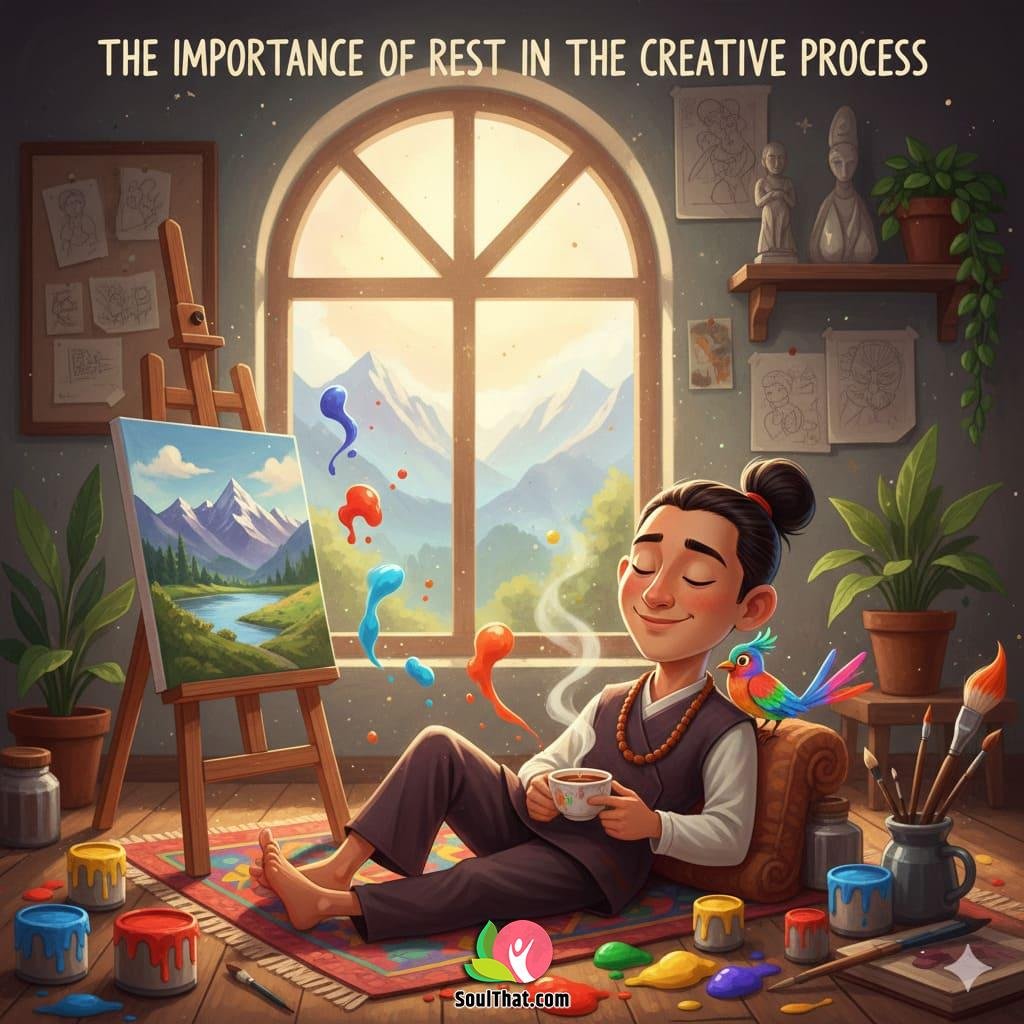
The Importance of Rest in the Creative Process – Creativity is often portrayed as a relentless pursuit of inspiration, with artists, writers, and innovators burning the midnight oil to produce their best work. However, rest is an equally critical, yet often undervalued, component of the creative process.
At SoulThat, we advocate for a balanced approach to creativity that nurtures both productivity and psychological wellness. In this blog, we’ll explore why rest is essential for creative output, how it enhances cognitive function, and practical ways to incorporate rest into your routine, all while fostering emotional health and sustaining your creative journey.
Why Rest Matters for Creativity
Rest is not the absence of work but an active process that rejuvenates the mind and body, paving the way for innovative thinking. Far from being a luxury, rest is a necessity that fuels creativity in several ways:
1. Enhancing Cognitive Function
Creative work relies on complex cognitive processes like problem-solving, memory consolidation, and divergent thinking. During rest, the brain processes information, strengthens neural connections, and integrates new ideas. Research shows that sleep, in particular, enhances the brain’s ability to make novel connections, leading to “aha” moments of insight.
2. Reducing Mental Fatigue
Pushing through creative tasks without breaks can lead to mental exhaustion, which stifles imagination and productivity. Rest replenishes mental energy, allowing you to approach your work with clarity and focus.
3. Boosting Emotional Health
Creativity is deeply tied to emotions. Chronic stress or burnout can dampen your ability to express yourself authentically. Rest, whether through sleep, relaxation, or mindfulness, regulates emotions, fostering a positive mindset conducive to creative expression.
4. Fostering Subconscious Creativity
Some of the best ideas emerge when you’re not actively trying to create. During restful states—like daydreaming, napping, or meditating—the subconscious mind processes ideas, leading to breakthroughs that might not occur during focused work.
5. Preventing Burnout
Burnout is a creativity killer. Without adequate rest, you risk depleting your mental and emotional reserves, leading to frustration and disengagement. Regular rest helps you sustain long-term creative output without sacrificing your well-being.
The Science Behind Rest and Creativity
Scientific research underscores the link between rest and creativity:
-
Sleep and Memory Consolidation: A study in Nature Reviews Neuroscience found that sleep enhances memory consolidation, allowing the brain to organize and connect ideas, which is crucial for creative problem-solving.
-
Default Mode Network (DMN): Restful states activate the brain’s DMN, responsible for daydreaming, self-reflection, and creative ideation. This network is most active during periods of relaxation or light activity, like walking or napping.
-
Stress Reduction: Rest lowers cortisol levels, reducing stress and improving mood. A positive emotional state is linked to greater creative output, as shown in research from The Journal of Positive Psychology.
-
Neuroplasticity: Rest supports neuroplasticity, the brain’s ability to adapt and form new connections, which is essential for generating innovative ideas.
Types of Rest for Creatives
Rest isn’t just about sleep—it encompasses various practices that restore your mind, body, and spirit. Here are key types of rest to incorporate into your creative routine:
1. Sleep
Quality sleep is the cornerstone of rest. Aim for 7-9 hours of uninterrupted sleep per night to support cognitive function and emotional balance. During sleep, the brain processes experiences and consolidates memories, often leading to creative insights upon waking.
2. Active Rest
Active rest involves low-intensity activities that relax the mind without requiring intense focus. Examples include gentle walks, yoga, or gardening. These activities allow your mind to wander, fostering subconscious creativity.
3. Mental Rest
Mental rest involves stepping away from cognitively demanding tasks. This could mean taking a break from screens, practicing mindfulness, or engaging in a hobby unrelated to your creative work.
4. Social Rest
Spending time with supportive people can be restorative. Whether it’s a coffee chat with a friend or a group outing, social rest replenishes emotional energy and strengthens your support network, as discussed in our previous blog on SoulThat.
5. Creative Rest
Creative rest involves stepping away from your primary creative work to engage in other forms of expression. For example, a writer might paint, or a musician might try photography. This shift refreshes your creative perspective.
Practical Ways to Incorporate Rest into Your Creative Routine
Integrating rest into a busy creative life requires intention. Here are actionable strategies to make rest a priority:
1. Schedule Rest Like a Task
Treat rest as a non-negotiable part of your schedule. Block off time for naps, walks, or meditation, just as you would for creative work.
-
How to Do It: Use a calendar to reserve 15-30 minutes daily for restful activities. Set reminders to ensure you follow through.
2. Practice the Pomodoro Technique
Work in focused intervals (e.g and take short breaks to rest your mind. This technique prevents mental fatigue and keeps your creativity sharp.
-
How to Do It: Work for 25 minutes, then take a 5-minute break to stretch, breathe, or step outside. After four cycles, take a longer 15-30 minute break.
3. Create a Restful Environment
Your environment influences how effectively you rest. Create a calming space free from distractions, whether it’s a cozy corner for reading or a quiet spot for meditation.
-
How to Do It: Dim the lights, play soft music, or use aromatherapy to signal relaxation. Keep your rest space separate from your work area.
4. Prioritize Sleep Hygiene
Good sleep starts with healthy habits. Establish a bedtime routine that signals to your body it’s time to wind down.
-
How to Do It: Avoid screens an hour before bed, practice relaxation techniques like deep breathing, and maintain a consistent sleep schedule.
5. Embrace Micro-Rests
Short bursts of rest can be surprisingly effective. Even a 5-minute meditation or a quick stretch can recharge your creative energy.
-
How to Do It: Set a timer for brief pauses throughout the day. Use apps like Calm or Headspace for guided micro-meditations.
6. Take Regular Creative Breaks
Step away from your primary creative project periodically to avoid burnout. Engage in a different creative activity or take a complete break from creative work.
-
How to Do It: Spend a weekend exploring a new hobby, like cooking or sketching, to refresh your perspective.
Overcoming Barriers to Rest
Despite its benefits, many creatives struggle to prioritize rest. Here are common barriers and how to address them:
-
Guilt About “Wasting Time”: Reframe rest as a productive part of the creative process. Remind yourself that rest enhances your output.
-
Busy Schedules: Start small with micro-rests or integrate rest into existing routines, like taking a walk during lunch.
-
Pressure to Produce: Set boundaries with yourself and others. Communicate that rest is essential for your long-term creative success.
-
Difficulty Relaxing: If your mind races, try mindfulness practices or journaling to ease into a restful state.
The Role of Rest in Long-Term Creative Success
Rest is not just a short-term fix—it’s a foundation for sustained creativity. By prioritizing rest, you:
-
Sustain Motivation: Regular rest prevents burnout, keeping you excited about your work.
-
Enhance Problem-Solving: A rested mind is better equipped to tackle creative challenges and generate innovative solutions.
-
Build Resilience: Rest strengthens your emotional health, helping you navigate criticism and setbacks, as discussed in our previous blog on SoulThat.
-
Deepen Self-Awareness: Restful practices like meditation foster introspection, allowing you to connect more deeply with your creative voice.
Real-Life Examples of Rest Fueling Creativity
Many renowned creatives have harnessed the power of rest to enhance their work:
-
Albert Einstein: The physicist often took naps to clear his mind, leading to breakthroughs in his theories.
-
Maya Angelou: The writer prioritized quiet mornings and breaks to reflect, which fueled her poetic and introspective work.
-
Leonardo da Vinci: Known for polyphasic sleep (short naps throughout the day), da Vinci used rest to maintain his prolific output.
Integrating Rest with Your Support Network
Your support network, as explored in our previous blog on SoulThat, can play a role in encouraging rest. Share your rest goals with your community, and hold each other accountable for prioritizing self-care. For example, organize a group walk or meditation session to combine social connection with rest.
Conclusion
Rest is a vital ingredient in the creative process, nourishing your mind, body, and spirit. By embracing sleep, active rest, and mental breaks, you unlock your full creative potential while safeguarding your emotional health. At SoulThat, we encourage you to view rest as an act of self-care that fuels your creative journey. Start small, experiment with different rest practices, and watch as your creativity flourishes.