
Introduction: Why Storytelling Matter More Than Ever
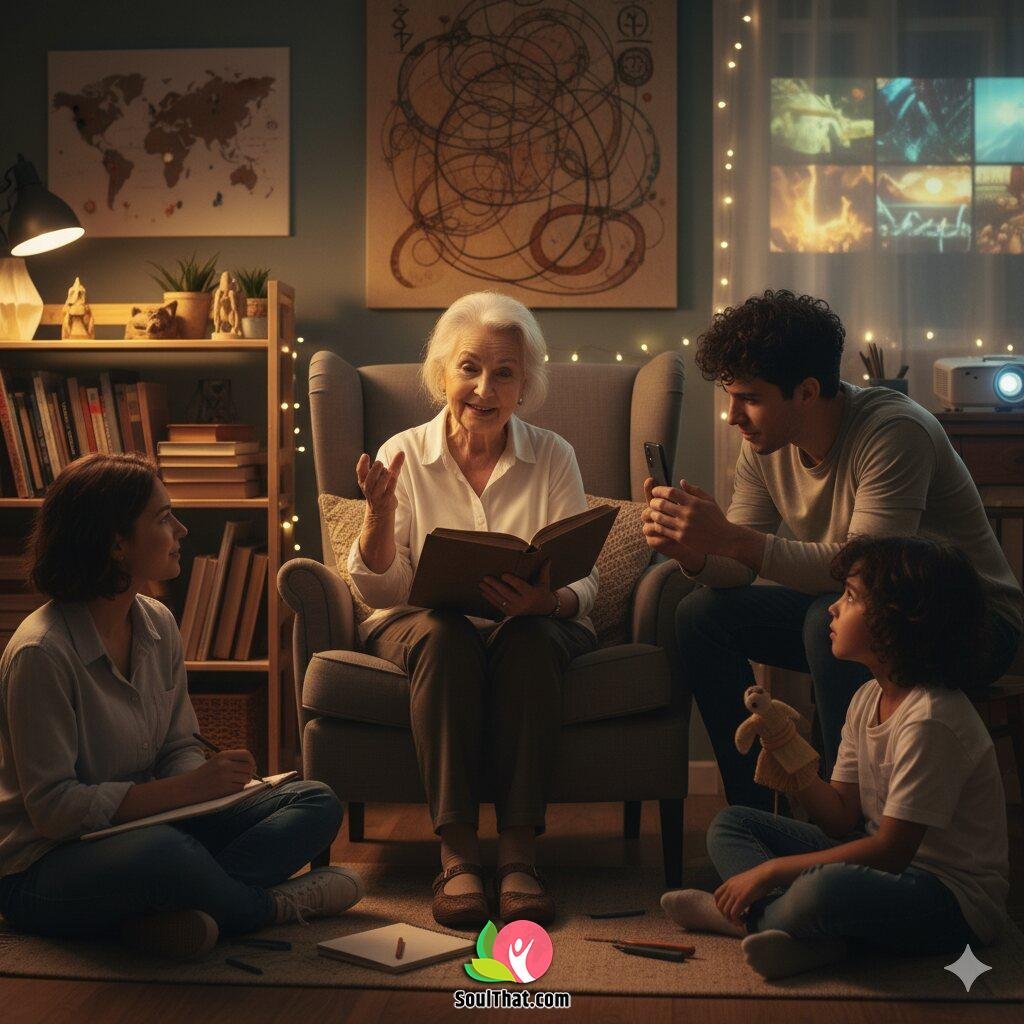
Since the beginning of time, humans have shared stories. Long before books, movies, or social media existed, people gathered around fires, passing tales from one generation to another. These weren’t just words—they were ways to understand the world, express emotions, and build bonds.
Storytelling isn’t just about entertainment. It’s the invisible thread that connects us. Every time we paint a picture, write a poem, design something new, or post online—we’re telling a story. Whether you’re an artist, entrepreneur, teacher, or student, the stories you tell shape how others see you and how you connect with them.
In this article, we’ll explore how storytelling influences creativity, fuels innovation, and helps us form deeper human connections. You’ll learn why stories are the heart of creation and how they can transform your ideas into something truly unforgettable.
The Power of Storytelling in Human History
From Cave Walls to Computer Screens
The earliest humans didn’t have language the way we do today. They drew on cave walls—simple shapes, animals, and hunting scenes—to share what mattered most. These early drawings were the first stories, expressing survival, curiosity, and imagination.
Over centuries, storytelling evolved:
| Era | Medium of Storytelling | Example |
|---|---|---|
| Prehistoric | Cave paintings, oral tales | Lascaux cave drawings |
| Ancient Civilizations | Myths, epics, stone carvings | Epic of Gilgamesh, Egyptian hieroglyphs |
| Middle Ages | Folklore, handwritten manuscripts | Fables, religious texts |
| Modern Era | Books, film, digital content | Movies, podcasts, social media posts |
No matter the form, one thing never changed—our need to connect through stories.
How Storytelling Fuels Creativity
1. Turning Ideas into Emotions
Every creative work—whether a painting, poem, or song—starts with a feeling. But feelings alone aren’t enough. Storytelling gives emotion a shape. It helps artists transform personal experiences into universal expressions that others can relate to.
A painting tells the story of emotion through color and movement.
A song shares a journey through rhythm and lyrics.
A design communicates meaning through visual language.
When we tell a story through our art, we invite people not just to see or hear—but to feel.
2. The Story Behind Every Creative Process
Every creator, knowingly or not, uses storytelling in their process:
| Stage | Description | Example |
|---|---|---|
| Inspiration | Finding the “why” | An artist recalls childhood memories for a painting |
| Exploration | Testing and shaping ideas | A writer builds characters and conflict |
| Creation | Giving life to the story | A filmmaker turns script into visuals |
| Sharing | Connecting with others | Posting, exhibiting, performing |
Without story, art can feel empty. With story, it becomes meaningful—something that speaks beyond words.
3. Stories Ignite Imagination
Storytelling allows us to see possibilities beyond reality.
When a child listens to a fairy tale, their mind paints pictures. When an inventor dreams of flying, storytelling becomes a blueprint for creation.
Some of the world’s greatest innovations began with a story:
Wright brothers imagined humans flying before airplanes existed.
Steve Jobs told a story about computers as “tools for the mind.”
Walt Disney envisioned a world where dreams come alive.
Every creative leap begins with someone telling a new kind of story—one the world hasn’t heard yet.
The Role of Storytelling in Connection
1. Stories Make Us Human
Science shows that storytelling activates parts of our brain linked to emotion and empathy. When we hear a powerful story, our brain releases oxytocin, a hormone that builds trust and compassion.
This means:
We remember stories better than facts.
We care more when there’s emotion involved.
We connect with others through shared experiences.
Stories make strangers relatable and help communities form around common beliefs.
2. Building Bridges Through Shared Experiences
Storytelling breaks barriers of age, culture, and background. It reminds us that even though our experiences differ, our emotions are the same.
Think of the following:
A refugee’s story can move hearts across continents.
A movie made in one language can inspire millions worldwide.
A personal blog post can spark hope in someone who’s struggling.
Through stories, we find common ground. They teach us to listen, to understand, and to see the world through someone else’s eyes.
3. Storytelling in the Digital Age
Today, everyone is a storyteller.
From short videos on TikTok to heartfelt captions on Instagram—our lives are constantly being shared through micro-stories.
But this digital storytelling has changed the game:
Visual stories (photos, infographics, reels) are processed 60,000x faster by our brains than text.
Authenticity is valued more than perfection.
Relatability drives connection, not just aesthetics.
In short, modern storytelling isn’t about showing off—it’s about showing up.
Storytelling in Art: Giving Meaning to Expression
1. Every Art Form Tells a Story
Whether it’s music, photography, dance, or sculpture—every art form is a language of storytelling.
| Art Form | Storytelling Element | Example |
|---|---|---|
| Music | Melody, lyrics, rhythm | Expressing heartbreak through song |
| Painting | Color, texture, contrast | A stormy seascape symbolizing struggle |
| Photography | Light, composition | Capturing a fleeting emotion |
| Dance | Movement, timing | Turning emotion into motion |
Artists often use symbols, contrasts, and hidden meanings to tell stories that words can’t fully express.
2. How Artists Use Storytelling to Connect Emotionally
Here’s how creative people use stories to connect:
Symbolism: Turning abstract emotions into visible form.
Perspective: Showing reality from a unique viewpoint.
Narrative progression: Taking the audience on a journey from beginning to end.
Example:
A photographer documenting urban decay might not just be showing broken buildings—but telling the story of forgotten lives within them.
That’s the magic of storytelling—it turns simple visuals into powerful messages.
Storytelling in Modern Creativity and Innovation
1. Brands That Tell Stories Win Hearts
In business, storytelling is no longer optional—it’s essential.
Consumers don’t just buy products; they buy the stories behind them.
Examples of powerful brand storytelling:
Nike: “Just Do It” isn’t just a slogan—it’s a story of courage and determination.
Apple: Tells stories of creativity and individuality.
Coca-Cola: Connects through happiness and togetherness.
When brands tell stories, they build emotional connections that statistics and features alone cannot achieve.
2. Storytelling in Technology and Design
Even technology has a story. Every app, logo, and user interface is designed to guide users through a journey.
Designers use storytelling to craft experiences that feel intuitive.
Developers create user flows that feel natural—like a story unfolding step by step.
Marketers share user success stories to inspire and engage.
Storytelling makes innovation human-centered, not machine-centered.
3. Storytelling for Change and Impact
Movements that change the world start with stories:
The #MeToo movement began with a story of courage.
Climate activists tell stories about the future we can still protect.
Nonprofits use storytelling to make invisible struggles visible.
When stories spark empathy, they inspire action. That’s the true power of narrative.
The Science Behind Storytelling and Connection
What Happens in the Brain During a Story
When you listen to or tell a story:
Your brain lights up in the same areas as the storyteller’s.
You begin to mirror emotions, experiencing them as your own.
Your attention and memory improve because the brain loves patterns.
That’s why lectures fade, but stories stay.
Neuroscience Summary Table
| Brain Process | Triggered By | Effect |
|---|---|---|
| Mirror Neurons | Emotional stories | Empathy and shared feeling |
| Dopamine Release | Suspense or resolution | Focus and motivation |
| Oxytocin Release | Connection moments | Trust and bonding |
So, science confirms what humans have always known: stories are how we connect, remember, and care.
How to Tell Stories That Inspire and Connect
1. Start With “Why”
Every great story begins with a purpose.
Ask yourself:
Why does this story matter?
What emotion do I want to leave behind?
What truth am I trying to express?
Once you find your “why,” everything else flows naturally.
2. Follow the Story Arc
A simple storytelling structure can make your narrative more powerful:
Beginning: Introduce the situation and characters.
Conflict: Show the struggle or problem.
Climax: The turning point or emotional high.
Resolution: The lesson, message, or outcome.
This pattern works for everything—from a short blog post to a feature film.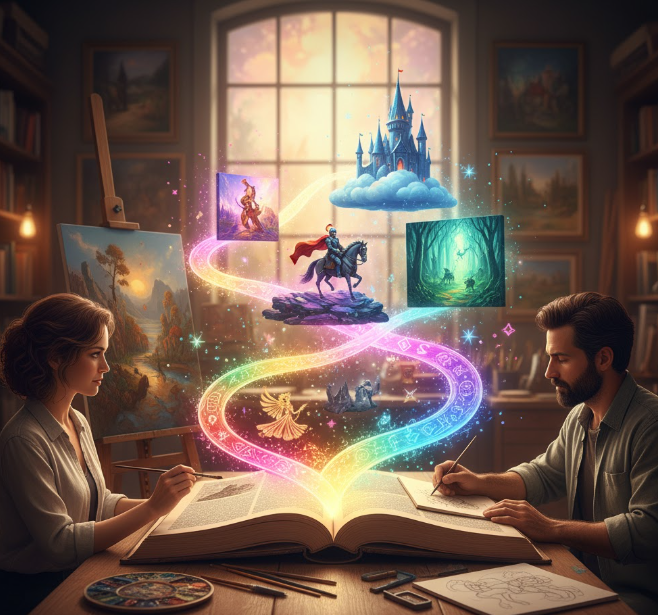
3. Make It Relatable
The best stories don’t aim for perfection—they aim for authenticity.
Show flaws, mistakes, and real moments. People connect to vulnerability more than victory.
Example:
Instead of saying, “I succeeded easily,” share, “I almost gave up—but I tried again.”
That’s where human connection happens.
4. Engage All the Senses
A story that activates multiple senses feels more real:
Use visual details (“golden sunset,” “dusty road”)
Add sounds (“the rain tapping on windows”)
Mention touch, taste, or smell (“the warmth of coffee in cold hands”)
These small details turn plain words into living experiences.
5. Use Silence and Simplicity
Not every story needs to be grand.
Sometimes, a quiet moment—a pause, a look, a single sentence—can carry more meaning than a page of dialogue.
Great storytellers know when to let the audience feel, not just listen.
Storytelling in Everyday Life
1. Conversations
When you talk to friends, you’re storytelling.
When you share a funny moment, explain your day, or comfort someone—you’re creating a connection through narrative.
2. Education
Teachers use stories to explain ideas.
A boring fact becomes exciting when told through a real-life example or story.
Example:
Instead of saying “Photosynthesis is how plants make food,”
a teacher might say, “Think of a leaf as a tiny kitchen, cooking food from sunlight.”
That’s storytelling at work.
3. Relationships
Couples, families, and friends share stories that shape their bond.
Old memories become shared identities.
Every inside joke, every “remember when…” keeps relationships alive.
The Future of Storytelling
1. Interactive and Immersive Narratives
With virtual reality (VR), augmented reality (AR), and artificial intelligence (AI), stories are becoming interactive experiences.
Now, audiences can step inside the story instead of just watching it.
VR films let viewers experience life through someone else’s eyes.
AR art adds digital layers to real-world experiences.
AI tools help creators experiment with new forms of expression.
The future of storytelling will be multi-sensory and participatory—but still rooted in human emotion.
2. Global Voices and Inclusivity
Technology allows anyone, anywhere, to tell their story.
Voices once silenced by geography or culture are now being heard.
This diversity is reshaping the creative world:
More authentic representation in media
New cultural perspectives in art
Broader empathy across audiences
The future of storytelling is global, inclusive, and deeply human.
Quick Recap: Why Storytelling Matters
| Aspect | Impact |
|---|---|
| Creativity | Turns emotions into meaningful art |
| Connection | Builds empathy and shared understanding |
| Innovation | Sparks imagination and new ideas |
| Culture | Preserves history and identity |
| Communication | Makes information memorable and relatable |
Storytelling isn’t just a skill—it’s our shared superpower.
Conclusion: Every Story Connects Us
At its heart, storytelling is more than just words or images—it’s the heartbeat of human creativity. It’s how we dream, share, and make sense of the world together.
Whether you’re painting, writing, designing, or simply talking with someone—you’re shaping the world through your stories.
So, don’t be afraid to tell them.
Tell the stories that move you. Tell the ones that scare you. Tell the ones only you can tell.
Because every story has the power to create, connect, and change lives—starting with yours.