
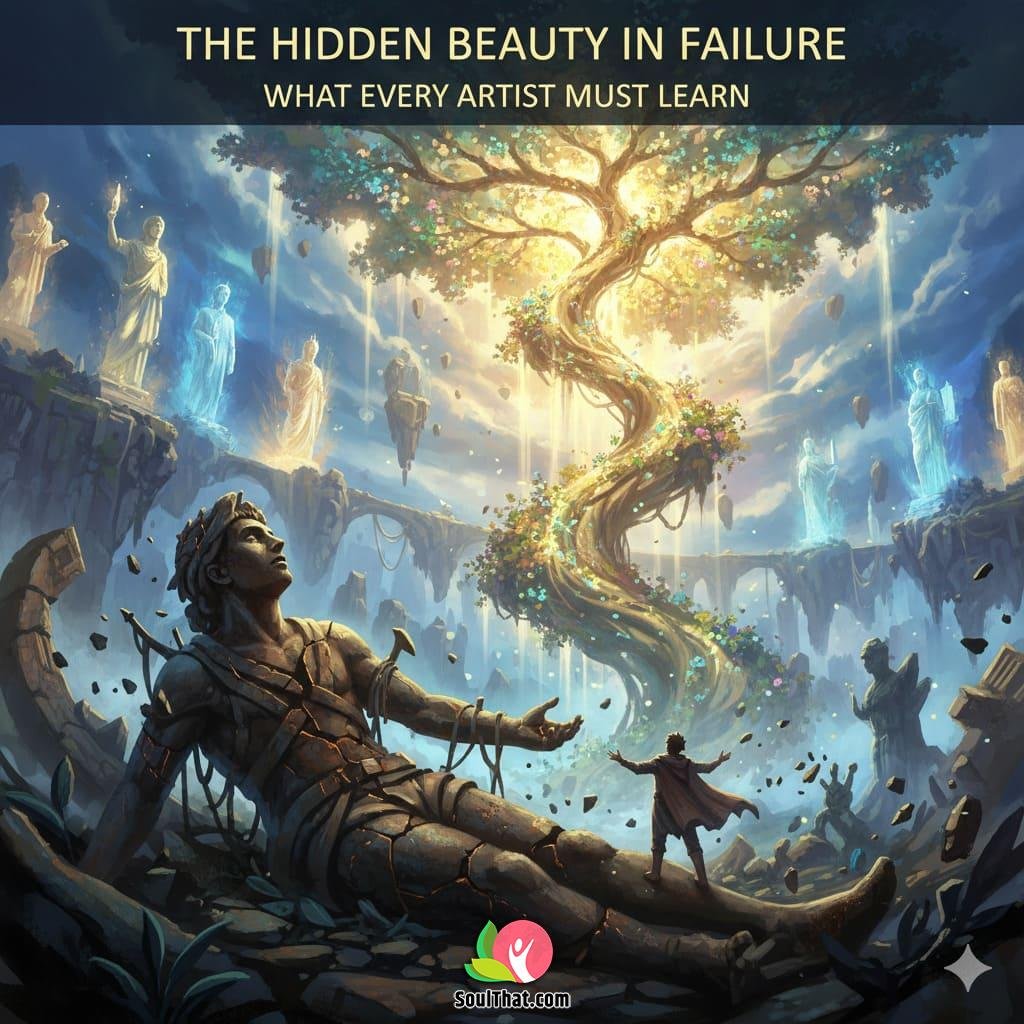
Introduction: When Falling Feels Like Flying
Every artist dreams of creating something extraordinary—something that touches hearts, tells stories, and captures beauty. But behind every masterpiece lies a trail of sketches torn apart, canvases painted over, and ideas that never quite worked. Failure is the unspoken companion of every creative journey. Yet, what if failure isn’t the end? What if, hidden beneath the mess and frustration, it holds the very lessons that lead to greatness?
In art, as in life, failure is not the opposite of success—it’s a part of it. Whether you paint, draw, sculpt, photograph, or design, learning to embrace your failures can transform how you create and how you grow as an artist.
This article dives deep into the hidden beauty in failure, exploring why mistakes matter, how to grow from them, and why every artist must fall before they rise.
Why Failure Feels So Heavy
Before discovering beauty in failure, it’s important to understand why it hurts so much in the first place.
1. The Fear of Judgment
Artists often pour their hearts into their work. When a painting or design doesn’t meet expectations—either your own or others’—it feels like a personal rejection.
You might think, “I’m not good enough,” or “Maybe I’m not meant to be an artist.”
But in reality, failure doesn’t define your talent—it tests your courage. Every artist you admire once faced the same doubts.
2. The Perfection Trap
Perfectionism is one of the biggest enemies of creativity. When you aim for flawless results, you become afraid to experiment.
And without experimentation, your art can’t evolve.
“Perfection is the enemy of progress.” – Winston Churchill
Real progress begins when you let go of perfection and allow yourself to make mistakes.
3. The Comparison Game
Scrolling through social media can be brutal. Everyone seems to be producing incredible art effortlessly.
But what you see online is a highlight reel, not the behind-the-scenes reality. Every masterpiece you admire has failed versions that never got posted.
The Secret: Failure Is a Teacher in Disguise
Failure feels painful, but it’s also the most honest feedback you’ll ever get.
Here’s why:
| Aspect of Art | What Failure Teaches | Hidden Beauty |
|---|---|---|
| Technique | Shows weaknesses in skill | Pushes improvement |
| Concept | Tests originality | Sparks new ideas |
| Execution | Reveals flaws in planning | Builds discipline |
| Emotion | Uncovers what feels genuine | Deepens self-expression |
Every failed attempt carries a hidden message—a clue about what you can refine, explore, or rethink next time.
How Great Artists Turned Failure into Strength
Vincent van Gogh: The Artist Who Failed in His Lifetime
Van Gogh sold only one painting during his lifetime. Critics called his art “too wild” and “unrefined.”
Yet today, his works inspire millions.
The beauty of his failure? He never stopped painting.
Every canvas was an experiment, every mistake a step closer to his timeless style.
Frida Kahlo: Turning Pain into Power
After a terrible accident, Frida was bedridden for months. She could have given up on art entirely. Instead, she used her suffering as inspiration, creating paintings that spoke of pain, identity, and resilience.
Her failures weren’t creative blocks—they were emotional breakthroughs.
Walt Disney: Fired for “Lack of Imagination”
Before Mickey Mouse, Walt Disney faced bankruptcy and was fired from a newspaper job. But every rejection pushed him to dream bigger.
His story reminds us that failure doesn’t destroy creativity—it directs it.
The Beauty of Failing Forward
So, how do you turn failure into a creative advantage?
Let’s explore practical ways to find beauty in your artistic setbacks.
1. Shift Your Mindset: See Failure as Feedback
Instead of thinking, “I failed,” try asking, “What did this teach me?”
Every unfinished sketch, rejected commission, or broken sculpture offers insights.
Your failures show you what doesn’t work—so you can discover what does.
Pro tip:
After every project, do a quick “art review” for yourself:
| Question | Purpose |
|---|---|
| What went right? | Celebrate progress |
| What went wrong? | Identify weak points |
| What did I learn? | Turn mistakes into lessons |
| What will I try next time? | Build improvement goals |
This transforms failure from a dead end into a roadmap for growth.
2. Embrace the “Messy Middle”
Every artwork goes through an awkward stage—where nothing looks right.
The colors clash, proportions look off, and your vision feels lost.
That’s the messy middle, and it’s where magic actually happens.
Instead of quitting, push through the discomfort. Most artists give up right before their work starts to come together.
3. Experiment Without Expectation
When you stop creating for approval and start creating for discovery, failure loses its sting.
Try this:
Paint or draw something with your non-dominant hand.
Limit yourself to three colors only.
Create an artwork in under 15 minutes.
These playful experiments train your mind to see mistakes as opportunities.
4. Keep a “Failure Journal”
Yes, you read that right.
A failure journal is a personal record of your creative missteps—unfinished paintings, rejected ideas, or techniques that didn’t work.
Why keep them? Because they show how far you’ve come.
Looking back after months or years, you’ll see your growth more clearly than any success story could ever show.
5. Celebrate Small Failures
Treat every mistake as a mini milestone.
Examples:
The painting that didn’t sell taught you what your audience likes.
The sculpture that cracked taught you about material handling.
The rejected design made you explore a new style.
Each one is a small win in disguise.
The Science Behind Why Failure Helps Creativity
You might wonder: Does failure really help creativity?
Science says yes.
1. The Brain Learns More from Mistakes
Studies show that when we fail, our brain activates regions linked to learning and memory.
That means mistakes literally rewire your brain to perform better next time.
2. Failure Builds Emotional Resilience
Creativity is emotional work. Each failure strengthens your ability to handle rejection, criticism, and doubt—skills every artist needs to survive in the real world.
3. Failure Encourages Innovation
When one method doesn’t work, your brain looks for alternatives.
This sparks new approaches, techniques, and styles you might never have discovered otherwise.
📊 Infographic: The Cycle of Creative Growth
This cycle repeats endlessly in every artist’s life.
Those who embrace it grow; those who fear it stay stuck.
How to Emotionally Cope with Failure as an Artist
Failure hurts. Let’s be honest. But learning how to process it emotionally can turn pain into power.
1. Allow Yourself to Feel It
Don’t rush to “get over it.” Sit with the feeling of disappointment.
Acknowledge it. Reflect on it. Then let it go.
2. Don’t Take Criticism Personally
Critique your work, not yourself.
Remember: failure says nothing about your worth—it just shows where you can grow.
3. Connect with Other Artists
Join art groups or online communities. You’ll quickly realize everyone fails—even the pros.
Sharing stories helps you feel less alone and more inspired.
4. Balance Effort and Rest
Burnout often leads to failure.
Make sure to rest, recharge, and find joy in small creative moments.
Transforming Failure into Artistic Style
Did you know many famous art styles were born from “mistakes”?
Let’s look at a few examples.
| Artist/Movement | What Went Wrong | What Emerged |
|---|---|---|
| Jackson Pollock | Couldn’t control paint strokes | Invented drip painting |
| Claude Monet | Struggled with realism | Created Impressionism |
| Pablo Picasso | Broke traditional proportions | Created Cubism |
These artists didn’t hide their failures—they turned them into innovation.
So if your painting looks “wrong,” maybe it’s actually your unique style trying to emerge.
5 Lessons Every Artist Should Learn from Failure
Lesson 1: Failure Builds Confidence
Strange, right? But facing failure and still creating anyway builds unshakable self-belief.
Lesson 2: Failure Teaches Patience
Art takes time. So does mastery.
Each failed attempt teaches you patience—the quiet strength behind all great art.
Lesson 3: Failure Sparks Curiosity
When things don’t work out, you start asking “why.” That curiosity is the root of innovation.
Lesson 4: Failure Deepens Expression
Struggle adds emotion and authenticity to your art.
The deeper your experiences, the more powerful your creations.
Lesson 5: Failure Makes Success Sweeter
When you finally create something you love after failing repeatedly, the joy is unmatched.
Because you know you earned it.
How to Use Failure to Grow as an Artist
Here’s a simple 5-step strategy to turn your creative failures into growth fuel:
| Step | Action | Outcome |
|---|---|---|
| 1 | Acknowledge the mistake | Accept responsibility |
| 2 | Reflect on what caused it | Gain awareness |
| 3 | Identify the lesson | Learn something new |
| 4 | Adjust your approach | Improve your method |
| 5 | Try again immediately | Build momentum |
The key is not to let failure freeze you.
The faster you create again, the quicker you grow.
From Fear to Freedom: Redefining Success
Maybe the problem isn’t failure—it’s how we define success.
Instead of measuring success by:
Likes or followers
Gallery shows or sales
Praise from others
Try defining it by:
Personal growth
Courage to experiment
Consistency in creating
Because real success is becoming the artist you’re meant to be, not just the one others approve of.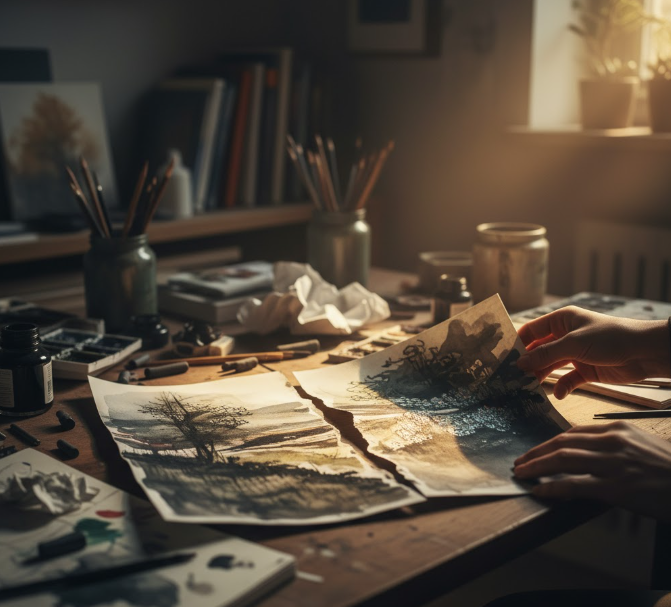
Creative Exercises to Practice “Failing Beautifully”
Blind Drawing: Close your eyes and draw something familiar.
→ Helps you let go of control and embrace imperfection.Destruction to Creation: Tear an old failed artwork and use its pieces to create a collage.
→ Turns failure into rebirth.Reverse Palette Challenge: Paint with colors you usually avoid.
→ Forces you to rethink your comfort zone.Speed Sketching: Draw 10 sketches in 10 minutes.
→ Teaches flow over perfection.Art Remix: Take an old failed artwork and recreate it with a new technique.
→ Reminds you how growth happens over time.
Quote Table: Words of Wisdom from Artists Who Embraced Failure
| Artist | Quote | Lesson |
|---|---|---|
| Salvador Dalí | “Mistakes are almost always of a sacred nature.” | Treat errors with respect—they lead to discovery. |
| Georgia O’Keeffe | “I have been absolutely terrified every moment of my life—and I have never let it stop me.” | Courage isn’t the absence of fear—it’s creating despite it. |
| Bob Ross | “We don’t make mistakes, just happy little accidents.” | Failure can lead to beauty if you stay open-minded. |
The Long-Term Gift of Failing
Failure doesn’t just improve your art—it shapes your mindset for life.
Artists who learn to see failure as part of the process become more:
Resilient – They bounce back faster.
Open-minded – They welcome experimentation.
Empathetic – They understand struggle in others.
Authentic – Their art reflects real human experience.
In a world chasing perfection, honesty and imperfection stand out. That’s where true artistry lies.
Conclusion: Finding Beauty Where Others See Brokenness
Every masterpiece is built on a mountain of mistakes.
Every artist, no matter how skilled, started with failure.
But here’s the truth: Failure isn’t a flaw—it’s your foundation.
It’s the process sculpting your patience, polishing your skill, and shaping your artistic voice.
So the next time your artwork doesn’t turn out the way you hoped—smile.
You’ve just taken one more step toward mastery.
Remember:
In art, there’s no such thing as wasted effort.
There’s only progress hiding inside every failure.
✅ Key Takeaways
Failure is not the end—it’s a teacher.
Every mistake carries a lesson that improves your craft.
Great artists aren’t those who never fail, but those who never quit.
The more you embrace failure, the freer your creativity becomes.