
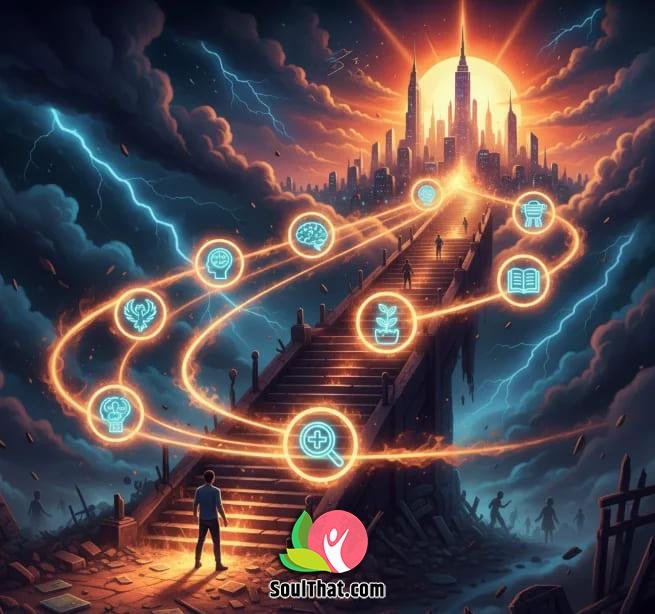
We’ve all faced failure. Maybe it was a test you flunked, a business plan that failed, or a dream that didn’t take off. The truth is, failure isn’t the end—it’s a stepping stone. What separates those who succeed from those who quit is how they respond to setbacks. The right mindset can transform failure from a source of frustration into a powerful tool for growth.
In this article, we’ll explore seven mindset shifts that help you use failure as fuel to reach your goals faster and smarter. Each shift comes with practical tips and examples you can start using today.
Shift 1: See Failure as a Lesson, Not a Loss
When something goes wrong, our first reaction is often to feel defeated. But every failure contains lessons.
How to Apply This Shift
-
Analyze what went wrong: Write down what led to the failure. Break it into smaller pieces.
-
Ask the right questions: Instead of asking “Why me?” ask, “What can I learn?”
-
Focus on improvement: Decide on one action you can take to prevent the same mistake next time.
Example:
If you didn’t get a promotion, instead of feeling unworthy, look at the skills or projects where you fell short. Then, create a plan to improve in those areas.
Table 1: Comparing Mindsets
| Traditional Mindset | Growth Mindset (Shift) |
|---|---|
| Failure = personal flaw | Failure = opportunity to learn |
| Avoids risk | Embraces challenge |
| Gives up easily | Finds alternative solutions |
Tip: Keep a “failure journal.” Each time you fail, note what you learned. Over time, this journal becomes a roadmap for success.
Shift 2: Focus on What You Can Control
One of the most frustrating aspects of failure is feeling powerless. Often, we focus on things beyond our control, like other people’s opinions or market conditions.
How to Apply This Shift
-
List all factors involved in your situation.
-
Highlight which ones you can control.
-
Focus your energy only on those factors.
Example:
If your startup didn’t attract customers, you can’t control the economy or competitors. But you can control your marketing, product quality, and customer service.
Infographic Suggestion:
A circle diagram showing “Things I Can Control” in the center, “Things I Can Influence” in the middle layer, and “Things I Can’t Control” in the outer layer.
Quick Tip: Spending time worrying about uncontrollable things wastes energy. Redirect it toward actionable steps.
Shift 3: Replace “I Failed” With “I’m Learning”
Language shapes perception. Saying “I failed” triggers negative emotions and self-doubt. A small change in wording can shift your mindset dramatically.
How to Apply This Shift
-
Replace phrases like:
-
“I can’t do this” → “I’m figuring this out.”
-
“I failed” → “I’m learning.”
-
“I lost” → “I gained insight.”
-
Why It Works:
Research shows that framing challenges as learning experiences increases resilience and motivation.
Bullet List: Benefits of this Shift
-
Reduces fear of taking risks
-
Encourages experimentation
-
Builds long-term confidence
-
Turns criticism into constructive feedback
Tip: Keep repeating these phrases daily. Over time, your brain associates challenges with growth instead of defeat.
Shift 4: Break Big Goals Into Tiny Wins
Big failures often feel overwhelming because the goal was massive. Breaking your objectives into smaller, achievable tasks creates momentum.
How to Apply This Shift
-
Take your big goal and divide it into smaller milestones.
-
Celebrate every small win.
-
Use each win as motivation for the next step.
Example:
If your goal is to write a book but your first draft is messy, celebrate finishing one chapter instead of focusing on the entire book.
Table 2: Small Wins vs. Big Wins Mindset
| Big Goal Thinking | Small Wins Thinking |
|---|---|
| I have to succeed fully | I can succeed step by step |
| One failure feels catastrophic | Each step is progress |
| Motivation fades quickly | Consistent motivation from milestones |
Tip: Use apps like Trello or Notion to track micro-goals. Visual progress boosts motivation.
Shift 5: Surround Yourself With the Right People
Your environment shapes your mindset. Toxic people amplify fear of failure, while supportive people encourage growth.
How to Apply This Shift
-
Identify negative influences: Reduce time spent with people who discourage risk-taking.
-
Seek mentors and peers: Connect with people who have overcome similar challenges.
-
Engage in communities: Online or local groups can provide accountability and encouragement.
Bullet List: Signs of a Growth-Focused Circle
-
People who celebrate your effort, not just results
-
Those who provide honest, constructive feedback
-
Individuals who share strategies instead of excuses
Quick Tip: Schedule weekly check-ins with someone who inspires you. Discuss your failures and what you learned.
Shift 6: Reframe Setbacks as Momentum
Instead of seeing setbacks as dead-ends, view them as fuel that can power your next move.
How to Apply This Shift
-
Ask, “How can this setback help me?”
-
Identify strengths or insights gained from the situation.
-
Channel emotions like frustration into productive actions.
Example:
A rejected job application can motivate you to upgrade your skills, research the company better, and network more strategically.
Chart Suggestion:
A line graph showing “Effort Over Time” vs. “Setbacks Over Time,” highlighting that temporary dips often precede growth spikes.
Tip: Every setback carries an invisible advantage. Track it and revisit it when motivation wanes.
Shift 7: Treat Yourself With Kindness
Failure often comes with self-criticism. Harsh self-talk makes you give up faster. Treating yourself with kindness builds resilience.
How to Apply This Shift
-
Practice self-compassion: Speak to yourself as you would a friend.
-
Avoid comparing yourself to others.
-
Reward effort, not just outcomes.
Bullet List: Ways to Practice Self-Kindness
-
Take a short break after a setback
-
Write down three positive things about yourself
-
Celebrate progress, even small steps
-
Use encouraging self-talk phrases like, “I’m doing my best”
Tip: Self-kindness improves mental health, reduces stress, and increases the likelihood of bouncing back stronger.
Bringing It All Together
Turning failure into fuel isn’t about pretending setbacks don’t hurt. It’s about training your mind to see every obstacle as an opportunity. By adopting these seven mindset shifts, you can:
-
Extract lessons from every failure
-
Focus your energy on what you can control
-
Speak positively to yourself
-
Build momentum through small wins
-
Surround yourself with supportive people
-
Reframe setbacks as opportunities
-
Treat yourself with compassion
Infographic Suggestion:
A pyramid diagram with the base as “Self-Kindness” and the peak as “Momentum from Setbacks,” showing that each layer supports the next.
Quick-Action Checklist: Turning Failure Into Fuel
-
Keep a failure journal
-
List factors you can control
-
Change your language from “I failed” to “I’m learning”
-
Break goals into small steps
-
Connect with a growth-focused community
-
Reframe setbacks as lessons
-
Practice self-compassion daily
Remember: Every successful person has failed multiple times. The difference lies in mindset. Each failure you experience is not a stop sign—it’s a signpost pointing you toward improvement.
Final Thoughts
Failure can feel heavy, discouraging, and unfair—but it doesn’t have to stay that way. When you shift your perspective, every mistake becomes a building block for success. By practicing these seven powerful mindset shifts, you will transform failure into fuel that propels you forward with clarity, confidence, and resilience.
Your journey is not defined by the falls you take but by how you rise after each one.